
AI News in 2026: Artificial Intelligence Moves from Excitement to Work
Contents
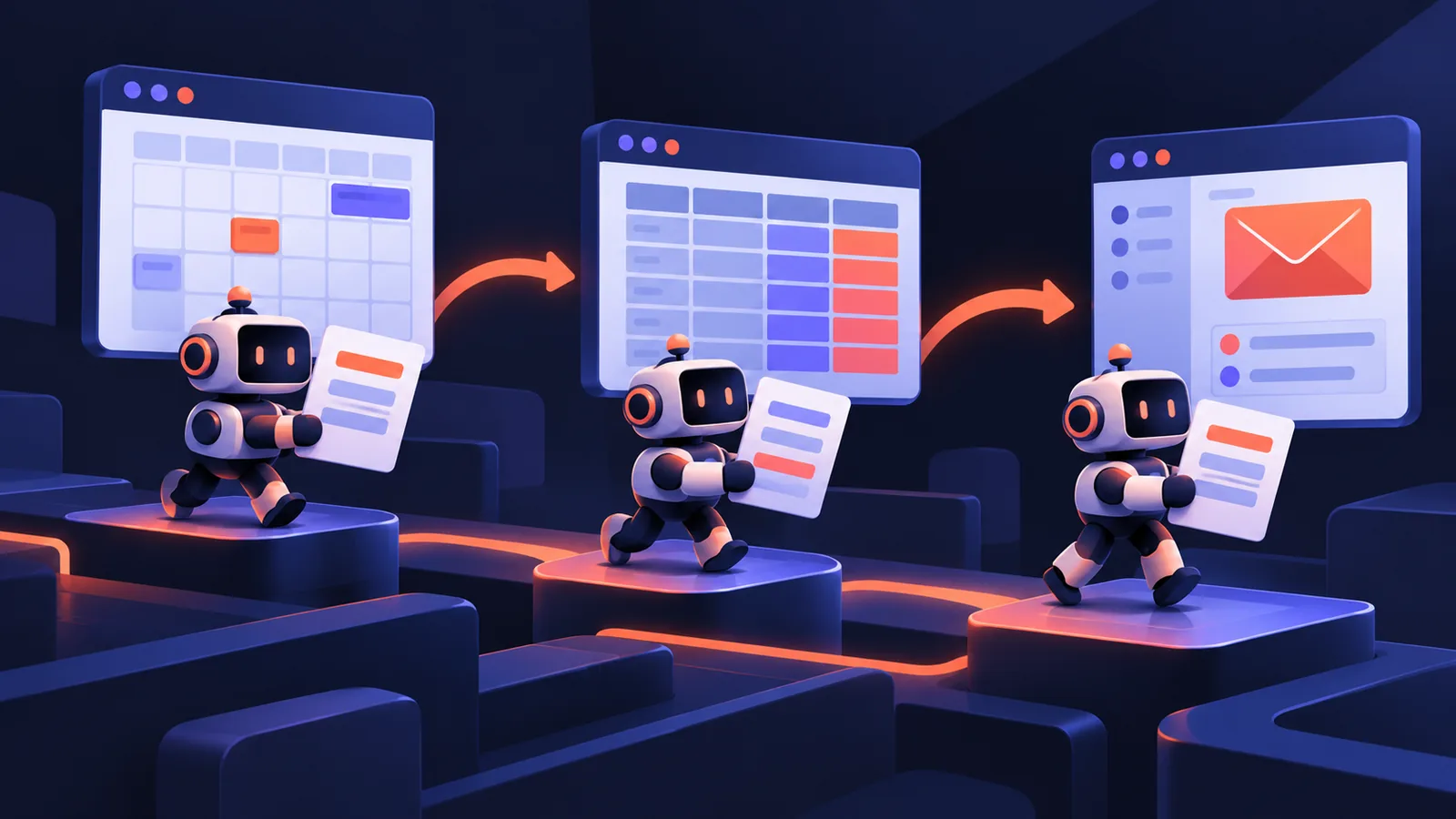
In recent years, much of the discussion around AI focused on which model could write better text or generate a more impressive image. In 2026, the picture is already very different. AI is gradually evolving from a tool that answers questions into a system that performs tasks, operates software, analyzes information, and becomes part of real workflows.
This is probably the most important shift happening in the field right now.
From chatbots to AI agents
One of the most prominent technology trends is the rise of AI agents.
Instead of being asked to write an email, summarize a document, or suggest an idea, an AI agent can be given a broader task and complete several steps toward finishing it. It can work with information from multiple sources, use external tools, and take actions within business systems.
OpenAI, for example, expanded its AI agent development tools in September 2026 and introduced the Agents API, as part of a broader shift from models that generate answers to systems that perform work.
For businesses, this is a significant difference. The question is no longer just "How can AI help an employee?" but which parts of the workflow itself can be handed over to an automated system.
AI moves deeper into business
The use cases are changing too.
Companies now use AI for software development, data analysis, research, customer service, marketing, sales, information security, and internal processes. At the same time, model developers are creating more specialized business products.
OpenAI, for instance, recently announced products and services in areas such as financial services, information analysis, and tools for AI agents. Other companies are developing models designed for specific professional tasks rather than general use alone.
As a result, the AI market is starting to look less like a contest for the "smartest chatbot" and more like a competition to become the infrastructure businesses build their work on.
Security questions come with it
The more capabilities we give AI systems, the greater the responsibility.
An agent that can only draft text is one thing. An agent with permission to access files, emails, business systems, or external tools raises an entirely different set of questions.
In September 2026, Anthropic published a report on attempts by various actors to use AI systems for malicious activity, including fraud, cyber operations, and influence campaigns. Meanwhile, companies in the field are beginning to invest more in monitoring, permissions, and controls over the actions AI agents take.
Microsoft also published draft principles intended to keep AI systems under human control and allow users to correct or stop them.
In other words, as AI gains more power to act, the question of control becomes increasingly central.
Regulation is starting to catch up too
The field's rapid development is not happening only inside technology companies.
Governments and regulators around the world are trying to work out how to address models whose capabilities change very quickly. The discussion is no longer limited to copyright or privacy. It also covers information security, model developers' responsibilities, the use of autonomous agents, and the impact on the labor market.
In September 2026, there were also reports of continuing AI safety talks between the United States and China, a sign that the technology has become a diplomatic and strategic issue as well.
What does this mean for the average business?
Most businesses do not need to chase every new model that enters the market.
It is much more important to understand where AI can solve a real problem.
Instead of asking "How do we bring AI into the business?", start with simpler questions: Which tasks are repetitive? Where do employees waste time? What information is difficult to find? Which processes can be shortened without compromising quality or oversight?
From there, you can assess whether an AI tool fits the task and what level of human supervision is still needed.
It is also important to remember how quickly the field changes. A capability considered advanced a year ago can become a standard feature in an existing system within months.
Anyone who wants to keep up with developments, tools, models, and launches in artificial intelligence should look beyond major technology company announcements to consider their actual impact on users and businesses.
The next stage of AI has already begun
The big AI story in 2026 is not just that models are becoming more powerful.
The more important change is that they are starting to gain access to tools and systems that let them do real work.
For businesses, this is a significant opportunity, but also a reason to be more precise about which tools they choose, the permissions those tools receive, and how they are supervised.
The period when AI was mainly a chat window is already behind us. Now comes the stage of deciding which tasks we are truly willing to let it perform.
Further Reading
 Artificial Intelligence
AI Is No Longer Just Writing for Us: It Is Helping Us Learn to Speak
 Artificial Intelligence
Being Cited Is Not Enough: How to Get ChatGPT, Gemini, and Perplexity to Recommend Your Brand
 Artificial Intelligence