
Generative Engines: What Businesses Need to Know About AI Answers
Contents
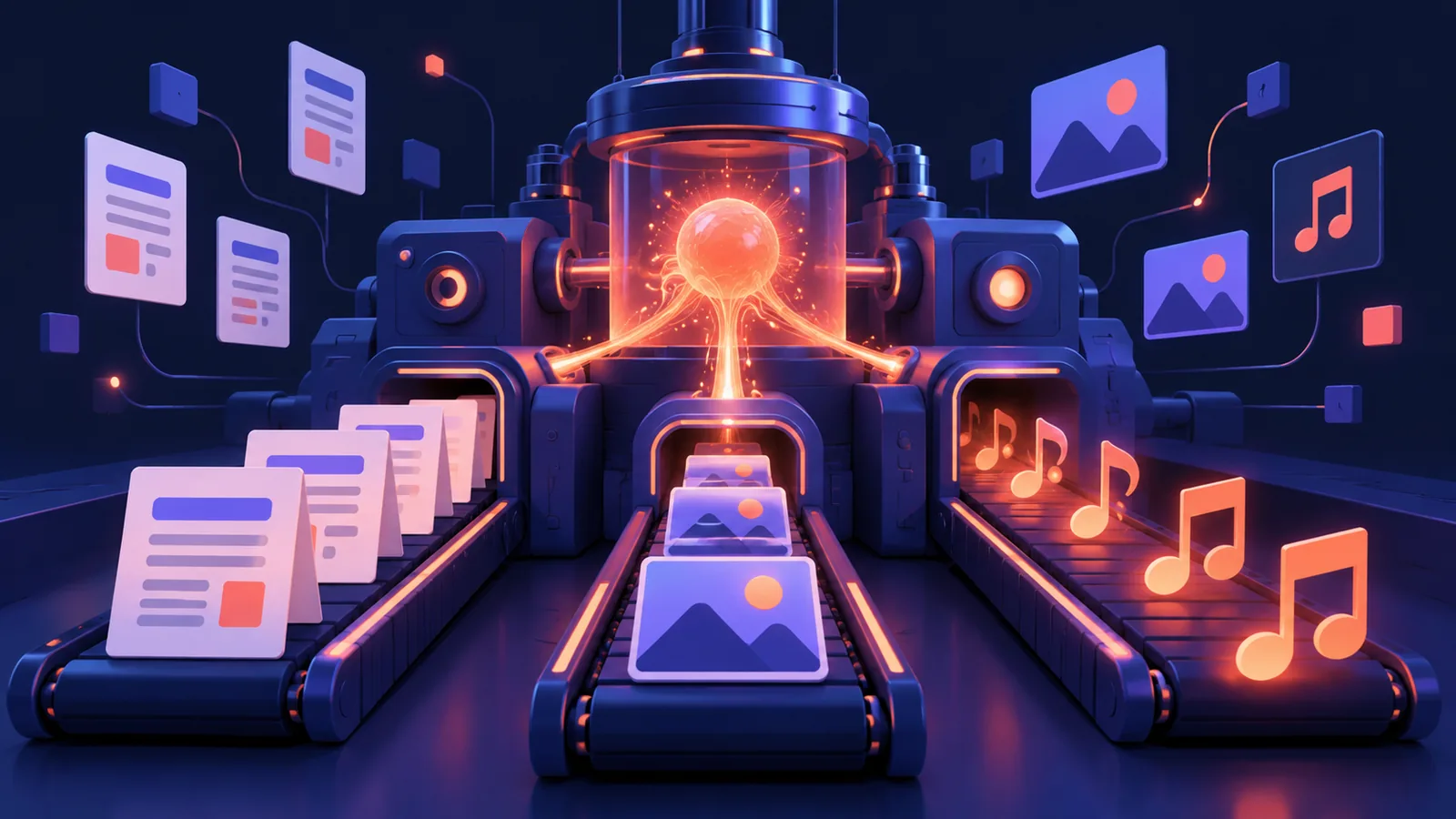
Generative engines are systems that create content, such as text, images, or video, based on a request and its context. For a business, the practical question has two parts: how to use them at work, and how to present clear information online when customers use them to learn about a service or choose a provider.
ChatGPT, Gemini, Claude, Perplexity, and DeepSeek are part of this environment, but they are not a single product with uniform rules. Before discussing promotion or content creation, understand what the system is doing and which information it uses to build its answer.
An answer can draw on several types of information
A model can produce an answer from what it learned during training, material supplied by the user, or tools that retrieve additional information. Web search, for example, can find current pages and use them to support part of an answer. Search is not activated in every conversation, and not every answer includes a source you can open.
Ask what is behind the result. A confident answer is not necessarily accurate, and a current date in the question does not guarantee the system checked today's information. For business details, pay particular attention to names, services, service areas, and terms.
What is the difference between GEO, AEO, and AIO?
GEO, Generative Engine Optimization, describes work on information visibility and presentation in environments that generate answers. AEO, Answer Engine Optimization, emphasizes content's ability to answer a question. AIO is a broad term used in different contexts, so ask what it refers to in each proposal.
Terminology does not replace a work plan. A useful proposal should explain which pages will be reviewed, which questions matter to the audience, and what can be measured. NexTarget's service focuses on connecting business information, website content, and evaluation of how it is presented.
Each system has its own route to information
In ChatGPT, distinguish an answer that used search from one that did not. In Claude, test source discovery separately from reading a URL supplied in the conversation. In DeepSeek, identify whether you are using the official service or another product integrating the model.
These differences are detailed on the pages for business visibility in ChatGPT, business visibility in Claude, and business visibility in DeepSeek. Adapt testing to the systems customers actually use rather than assuming a mention in one guarantees a mention in all.
SEO remains part of the foundation
A website needs to explain the business to someone reading it directly too. Accessible pages, internal links, consistent details, and useful content provide a foundation. Creating dozens of similar pages serves little purpose if none answers a question the customer needs to resolve.
In its guidance on AI features in search, Google states that normal SEO principles remain relevant and no special markup is required for inclusion. This guidance applies to Google search. It does not establish that every AI service works the same way or that technical accessibility guarantees source selection.
Use AI on the business side too
Generative systems can help organize ideas, prepare drafts, and explore explanations. But marketing material must reflect a real service. Before publication, check facts, wording, and audience fit, and make sure no promises have been added that the business cannot fulfill.
When choosing a workflow, define who provides information and who approves it. For example, a service manager can check the professional description, while the marketing lead checks the message and call to action. This division of responsibility gives every draft a clear reviewer.
The first step can be small: choose a recurring customer question and check whether the website answers it well. Continue reading about marketing, AI, and technology on the NexTarget blog, assessing each idea by its usefulness to the business.