
AI in Marketing and Advertising: Opportunities, Cyber Risks, and Trends for 2026
Contents
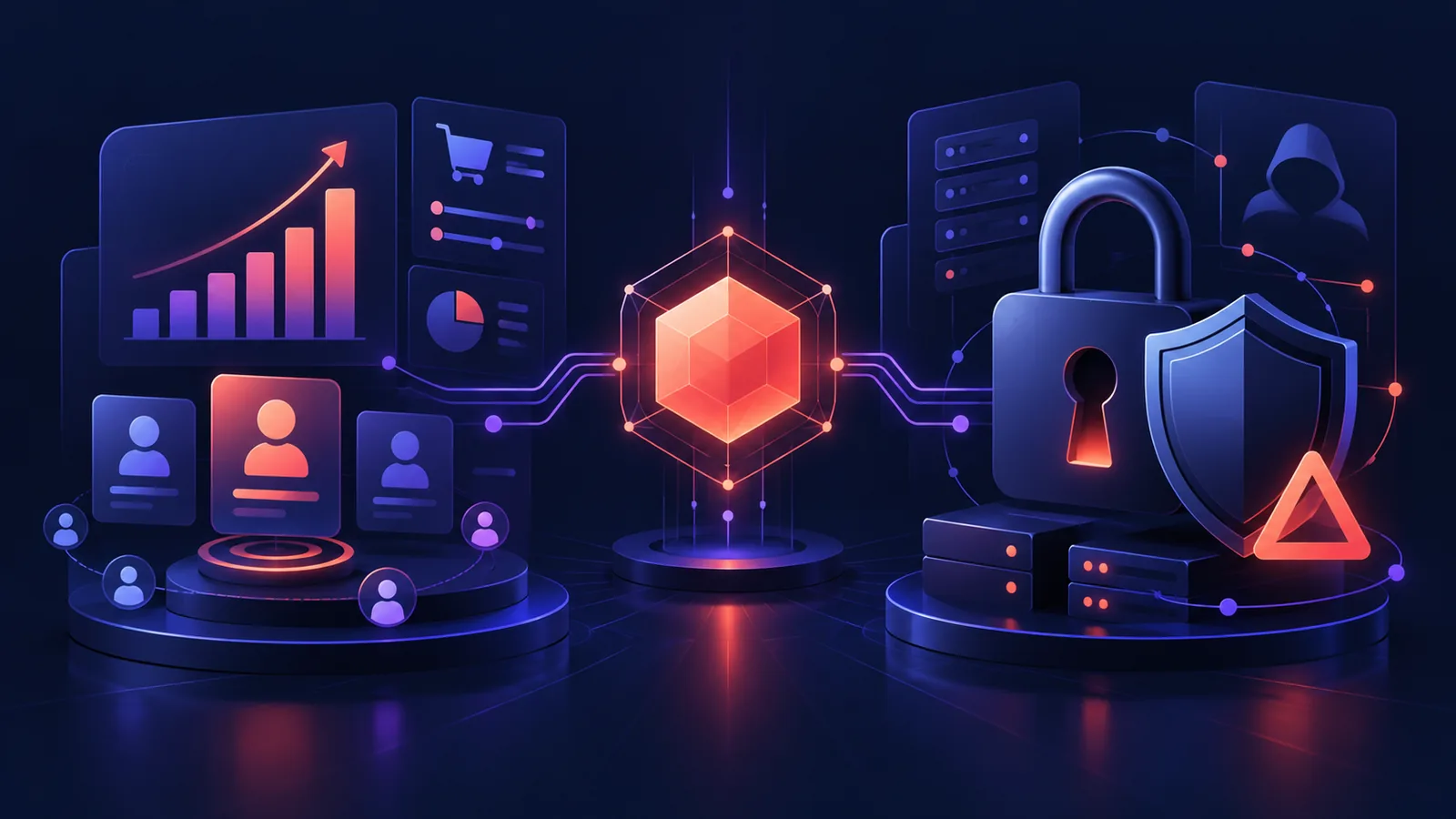
In the fast-moving digital world of 2026, artificial intelligence (AI) has taken center stage in marketing and advertising. As the technology advances, companies are incorporating AI to improve efficiency, personalize user experiences, and create content quickly. Alongside these opportunities, however, new cyber risks are emerging, including AI-driven attacks and data leaks. This article examines a recent trend: the rise of AI agents in marketing, the cybersecurity implications, and response strategies, based on reports from 2025-2026.
Key AI trends in marketing and advertising
In recent years, AI has moved from experimentation to widespread use. According to a Kantar report, 2026 will see AI agents flourish at scale, with consumers entrusting them with purchasing decisions such as finding products or services. These agents, which integrate digital wallets and cryptocurrencies, will enable greater autonomy. Brands will need to adapt to "nonhuman consumers" by optimizing content for AI engines (Generative Engine Optimization, or GEO).
Coursera also emphasizes AI's efficiency gains: 80% of advanced creative roles will use GenAI by 2026, with an emphasis on rapid content creation and data analysis. For example, AI-powered chatbots are expected to grow by 23.3% annually, enabling effective conversational interactions. Personalization has become central, with 96% of marketers reporting increased sales after using AI for personalization.
Cyber risks in the AI era
Alongside this progress, AI introduces new risks. A Darktrace report notes that AI agents could become an "insider risk," with unpredictable behavior such as sharing sensitive data in response to malicious prompts. Prompt injection attacks, in which attackers alter AI behavior, can lead to data leaks or malicious actions, particularly in AI-integrated SaaS platforms.
eSecurity Planet emphasizes that AI is both an opportunity and a risk: 50% of organizations are concerned about shadow AI (unauthorized use), and 41.7% about sharing sensitive data with AI tools. Attackers use AI for faster attacks, such as deepfakes in fake advertisements or personalized phishing. Google's Cybersecurity Forecast 2026 describes an "AI arms race," in which attackers use AI to expand the scale of attacks while defenders develop an "Agentic SOC" for automated protection.
In marketing, these risks take the form of privacy breaches: as third-party cookies decline, marketers rely on first-party data, but AI increases the risk of leaks.
Response strategies and recommendations
To benefit from AI while minimizing risks, consider approaches such as:
- Transparency and explainability: brands should emphasize transparent AI, with metrics such as reduced threat detection time.
- Identity security: manage machine and human identities, including monitoring AI agents.
- Training and ethics: invest in secure AI skills, including data privacy and ethics.
- According to Deloitte, successful organizations move from "experimentation" to impact while balancing innovation and protection.
Conclusion
The combination of AI, marketing, and cybersecurity creates new opportunities, but requires care. In 2026, brands that adopt AI agents alongside strong cybersecurity will lead the market. As recent reports emphasize, the key is balancing innovation and security to ensure sustainable growth.
Further Reading
 Artificial Intelligence
AI Is No Longer Just Writing for Us: It Is Helping Us Learn to Speak
 Artificial Intelligence
AI News in 2026: Artificial Intelligence Moves from Excitement to Work
 Artificial Intelligence